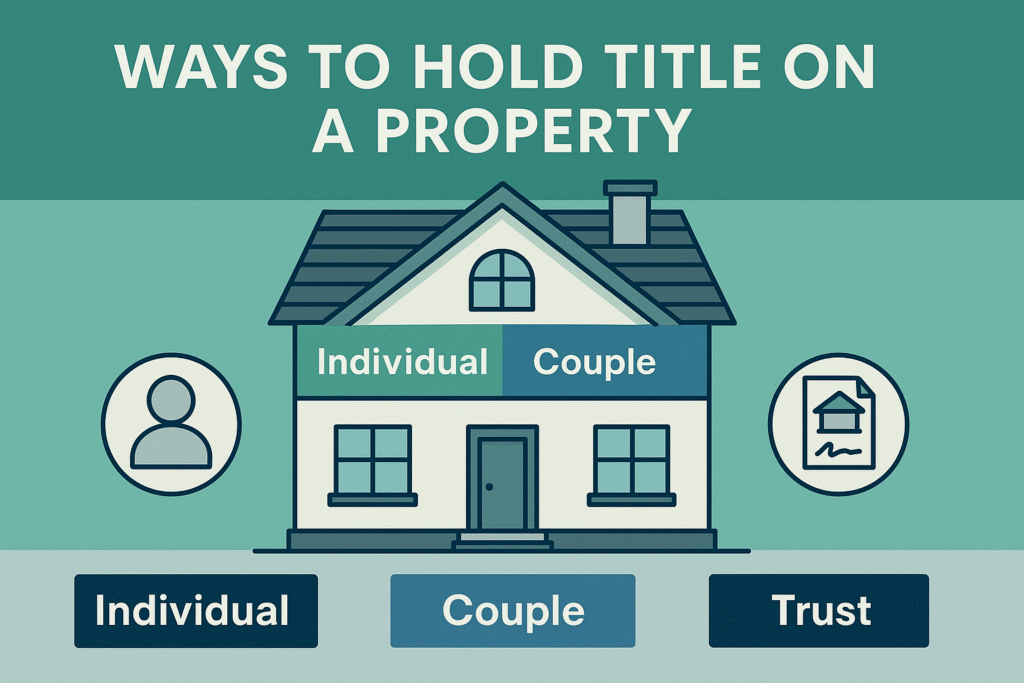
When you buy a home, one of the most overlooked but important decisions you’ll make is how to hold title—that is, how your ownership is legally recorded. It determines who owns what, how property can be transferred, and what happens if one of the owners passes away.
Choosing the right way to hold title can impact inheritance, taxes, and legal protection, so let’s break it down in plain language with simple examples.
What Does “Holding Title” Mean?
When you purchase real estate, the “title” is your legal ownership of that property. The way your name (or names) appear on the title determines:
- Who legally owns the property
- How ownership can be transferred or sold
- What happens if an owner dies
- How disputes are handled
Your title choice will be listed on your deed and recorded with your local county.
Common Ways to Hold Title
Below are the most common forms of ownership, with examples to help you see how each one works.
🏡 Sole Ownership
This means one person owns 100% of the property.
Example:
Jane buys a condo in her name only. She is solely responsible for payments, taxes, and decisions. If she passes away, the property goes to her estate or whoever she names in her will.
✅ Best for: Single buyers or those purchasing property individually.
Use the Home Affordability Calculator to see what price range fits a single-income household.
👥 Joint Tenancy (With Right of Survivorship)
Two or more people own the property equally. If one person dies, their share automatically goes to the surviving owner(s)—no probate needed.
Example:
John and Maria buy a home as joint tenants. If John passes away, Maria automatically becomes the sole owner.
✅ Best for: Married couples, family members, or partners who want ownership to transfer automatically.
💍 Tenancy by the Entirety
This option is only available to married couples in certain states. Both spouses own the property together as one legal unit.
If one spouse passes away, the other automatically becomes full owner. Neither can sell or refinance without the other’s consent.
Example:
Carlos and Ana buy their home as “tenants by the entirety.” When Ana passes, Carlos automatically inherits the property—no court needed.
✅ Best for: Married couples seeking maximum protection and seamless transfer.
💼 Tenants in Common (TIC)
Each owner holds a specific percentage of the property, which may or may not be equal. Owners can sell, gift, or pass down their portion independently.
Example:
Three siblings—Alex, Bella, and Chris—buy an investment property. Alex owns 50%, Bella owns 30%, and Chris owns 20%. If Alex passes away, his 50% goes to his heirs, not automatically to the others.
✅ Best for: Business partners, investors, or family members with unequal contributions.
Use the Investment Property Calculator to plan how your shared equity could perform over time.
🏦 Community Property
In community property states (like California, Arizona, or Texas), any property purchased during marriage is owned equally by both spouses, regardless of who paid for it.
If one spouse passes away, their share goes to their estate unless there’s a right-of-survivorship clause.
✅ Best for: Married couples in community property states.
🧾 Living Trust (or Revocable Trust)
The property is owned by a trust, not an individual. The homeowner (trustee) controls it during their lifetime, and after passing, it transfers directly to the named beneficiaries—avoiding probate.
Example:
Susan places her home in a living trust with her children as beneficiaries. When she passes, the property transfers directly to them without court delays.
✅ Best for: Homeowners planning their estate and wanting to simplify inheritance.
You can estimate your future property value growth using the Wealth Builder Calculator.
Why Your Title Choice Matters
Your title determines:
- Who controls the property
- How it transfers when someone dies
- Whether creditors can place liens
- Tax implications for selling or inheriting
It’s smart to review your ownership with a real estate attorney or mortgage professional—especially if you’re buying with someone else.
You can request a Call Back for a free consultation to review your situation and title options before closing.
Title vs Insurance: Not the Same Thing
Don’t confuse title with home insurance. Title defines ownership, while insurance protects your home and belongings from loss.
Learn how to choose the right coverage in our guide to Home Insurance Basics and estimate your monthly payment with the Monthly Payment Calculator.
Real-Life Example: Business Partners
Sam and Taylor buy a duplex as an investment. Sam owns 60%, Taylor owns 40%. They title the property as tenants in common so each can pass their portion to their heirs separately.
This structure protects their individual stakes while keeping their investment flexible.
If you’re debating whether to buy now or wait, the Buy Now vs Wait Calculator can help weigh timing and cost.
The Bottom Line
Choosing how to hold title isn’t just legal jargon—it affects how your home is protected, passed on, and shared. The right setup depends on whether you’re:
- Buying alone or with others
- Married or in a partnership
- Planning to leave your property to heirs
👉 Before you close, talk with your loan officer or request a Call Back to ensure your title aligns with your financial goals.